How to generate a membership inference attacks report?#
Check that the synthetic data protect the privacy of the real data#
Based on the Wisconsin Breast Cancer Dataset (WBCD)
[1]:
# Standard library
import sys

sys.path.append("..")
import tempfile
from pathlib import Path
import time

# 3rd party packages
import pandas as pd
from sklearn.model_selection import train_test_split

# Local packages
from clover.generators import (
    Generator,
    DataSynthesizerGenerator,
    SynthpopGenerator,
    SmoteGenerator,
    TVAEGenerator,
    CTGANGenerator,
    FinDiffGenerator,
    MSTGenerator,
    CTABGANGenerator,
)
from clover.metrics.privacy.report import PrivacyReport
from clover.utils.standard import create_directory
Generate synthetic data#
Load the Wisconsin Breast Cancer Dataset#
[2]:
df_real = pd.read_csv("../data/breast_cancer_wisconsin.csv").drop(
    "Sample_code_number", axis=1
)
df_real.shape
[2]:
(683, 10)
[3]:
df_real.head()
[3]:
| Clump_Thickness | Uniformity_of_Cell_Size | Uniformity_of_Cell_Shape | Marginal_Adhesion | Single_Epithelial_Cell_Size | Bare_Nuclei | Bland_Chromatin | Normal_Nucleoli | Mitoses | Class | |
|---|---|---|---|---|---|---|---|---|---|---|
| 0 | 5 | 1 | 1 | 1 | 2 | 1 | 3 | 1 | 1 | 2 |
| 1 | 5 | 4 | 4 | 5 | 7 | 10 | 3 | 2 | 1 | 2 |
| 2 | 3 | 1 | 1 | 1 | 2 | 2 | 3 | 1 | 1 | 2 |
| 3 | 6 | 8 | 8 | 1 | 3 | 4 | 3 | 7 | 1 | 2 |
| 4 | 4 | 1 | 1 | 3 | 2 | 1 | 3 | 1 | 1 | 2 |
Split the real data into train and test sets#
[4]:
df_real_train, df_real_test = train_test_split(
    df_real, test_size=1 / 3, random_state=42, stratify=df_real["Class"]
)
[5]:
df_real_train.to_csv("../data/WBCD_train.csv", index=False)
df_real_test.to_csv("../data/WBCD_test.csv", index=False)
Create the metadata dictionary#
The continuous and categorical variables need to be specified, as well as the variable to predict for the future learning task (used by SMOTE)
[6]:
metadata = {
    "continuous": [
        "Clump_Thickness",
        "Uniformity_of_Cell_Size",
        "Uniformity_of_Cell_Shape",
        "Marginal_Adhesion",
        "Single_Epithelial_Cell_Size",
        "Bland_Chromatin",
        "Normal_Nucleoli",
        "Mitoses",
        "Bare_Nuclei",
    ],
    "categorical": ["Class"],
    "variable_to_predict": "Class",
}
Choose a generator#
We choose synthpop as generator with default setting
[7]:
gen = SynthpopGenerator(
    df=df_real_train,
    metadata=metadata,
    random_state=42,  # for reproducibility, can be set to None
    generator_filepath=None,  # to load an existing generator,
    variables_order=None,  # use the dataframe columns order by default
    min_samples_leaf=5,  # default = 5
    max_depth=None,
)
Fit the generator to the real train data#
[8]:
create_directory(
    path="../results/attack/generator/1st_generation"
)  # create path if doesn't exist

gen.preprocess()
gen.fit(save_path="../results/attack/generator/1st_generation")  # the path should exist
Generate synthetic data#
[9]:
create_directory(
    path="../results/attack/data/1st_generation"
)  # create path if doesn't exist

df_synth_train = gen.sample(
    save_path="../results/attack/data/1st_generation",  # the path should exist
    num_samples=len(df_real_train),
)
[10]:
df_synth_test = gen.sample(
    save_path="../results/attack/data/1st_generation",  # the path should exist
    num_samples=len(df_real_test),
)
Generate 2nd generation synthetic data#
We choose the same generator and setting to generate the 2nd generation synthetic data
[11]:
gen_2nd = SynthpopGenerator(
    df=df_synth_train,
    metadata=metadata,
    random_state=42,  # for reproducibility, can be set to None
    generator_filepath=None,  # to load an existing generator,
    variables_order=None,  # use the dataframe columns order by default
    min_samples_leaf=5,  # default = 5
    max_depth=None,
)
[12]:
create_directory(
    path="../results/attack/generator/2nd_generation"
)  # create path if doesn't exist

gen_2nd.preprocess()
gen_2nd.fit(
    save_path="../results/attack/generator/2nd_generation"
)  # the path should exist
[13]:
create_directory(
    path="../results/attack/data/2nd_generation"
)  # create path if doesn't exist

df_synth_2nd = gen_2nd.sample(
    save_path="../results/attack/data/2nd_generation",  # the path should exist
    num_samples=len(df_synth_train),
)
Generate privacy report#
Gethor real and synthetic data into dictionaries#
[14]:
df_real_dict = {}
df_real_dict["train"] = df_real_train
df_real_dict["test"] = df_real_test

# 1st and 2nd generation synthetic data
df_synth_dict = {}
df_synth_dict["train"] = df_synth_train
df_synth_dict["test"] = df_synth_test
df_synth_dict["2nd_gen"] = df_synth_2nd
Generate the privacy report#
[15]:
report = PrivacyReport(
    dataset_name="Wisconsin Breast Cancer Dataset",
    df_real=df_real_dict,
    df_synthetic=df_synth_dict,
    metadata=metadata,
    figsize=(8, 6),  # will be automatically adjusted for larger or longer figures
    random_state=42,  # for reproducibility purposes
    report_filepath=None,  # load a computed report if available
    metrics=None,  # list of the metrics to compute. If not specified, all the metrics are computed.
    sampling_frac=0.5,  # the fraction of data to sample from real and synthetic datasets for better computing performance
    num_repeat=10,  # for the metrics relying on predictions
    num_kfolds=3,  # the number of folds to tune the hyperparameters for the metrics relying on predictors
    num_optuna_trials=15,  # the number of trials of the optimization process for tuning hyperparameters for the metrics relying on predictors
    use_gpu=True,  # run the learning tasks on the GPU
)
[16]:
start = time.time()

report.compute()

end = time.time() - start

print(f"Time taken: {end:.2f} seconds.")
GAN-Leaks test set shape: (228, 10)
Monte Carlo Membership test set shape: (228, 10)
LOGAN test set shape: (228, 10)
/data8/install/anaconda3/envs/synthetic_data_p3.10/lib/python3.10/site-packages/xgboost/core.py:158: UserWarning: [20:53:41] WARNING: /workspace/src/common/error_msg.cc:58: Falling back to prediction using DMatrix due to mismatched devices. This might lead to higher memory usage and slower performance. XGBoost is running on: cuda:0, while the input data is on: cpu.
Potential solutions:
- Use a data structure that matches the device ordinal in the booster.
- Set the device for booster before call to inplace_predict.

This warning will only be shown once.

  warnings.warn(smsg, UserWarning)
TableGan test set shape: (228, 10)
Detector test set shape: (228, 10)
Time taken: 310.38 seconds.
Get the summary report as a pandas dataframe#
[17]:
report.specification()
----- Wisconsin Breast Cancer Dataset -----
Contains:
    - 455 instances in the train set,
    - 228 instances in the test set,
    - 10 variables, 9 continuous and 1 categorical.
[18]:
df_summary = report.summary()
[31]:
by = ["name", "objective", "min", "max"]
df_summary.groupby(by, group_keys=True).apply(
    lambda x: x.reset_index(drop=True), include_groups=False
)
[31]:
| alias | submetric | value | |||||
|---|---|---|---|---|---|---|---|
| name | objective | min | max | ||||
| Collision | - | 0 | inf | 0 | collision | avg_num_appearance_realtrain | 1.463023 |
| 1 | collision | avg_num_appearance_realcontrol | 1.349112 | ||||
| 2 | collision | avg_num_appearance_synth | 1.413043 | ||||
| 3 | collision | avg_num_appearance_collision_real | 3.403509 | ||||
| 4 | collision | avg_num_appearance_collision_synth | 3.263158 | ||||
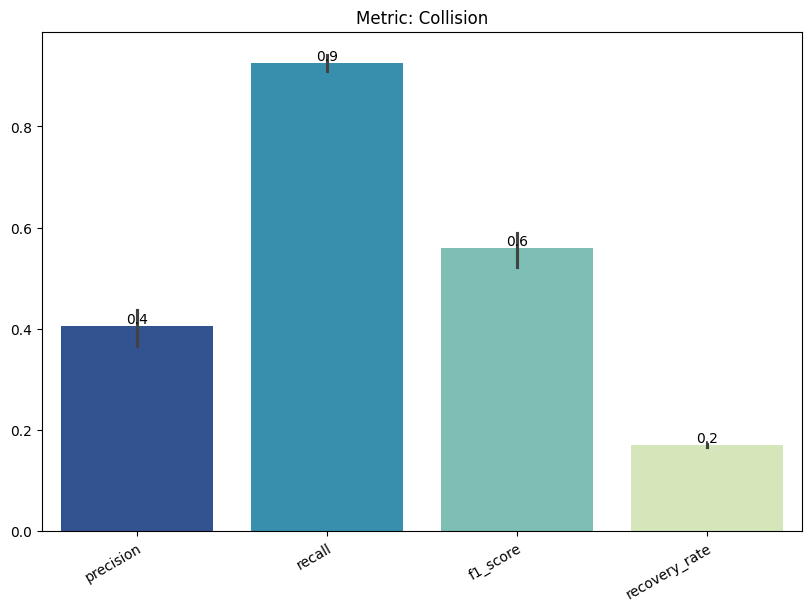
| min | 0 | 1.0 | 0 | collision | precision | 0.404410 | |
| 1 | collision | recall | 0.924561 | ||||
| 2 | collision | f1_score | 0.559463 | ||||
| 3 | collision | recovery_rate | 0.169453 | ||||
| DCR | max | 0 | 1.0 | 0 | dcr | dcr_5th_percent_synthreal_train | 0.000000 |
| 1 | dcr | dcr_5th_percent_synthreal_control | 0.000000 | ||||
| 2 | dcr | dcr_5th_percent_train_test_ref | 0.000000 | ||||
| 3 | dcr | nndr_5th_percent_synthreal_train | 0.000000 | ||||
| 4 | dcr | nndr_5th_percent_synthreal_control | 0.000000 | ||||
| 5 | dcr | nndr_5th_percent_train_test_ref | 0.000000 | ||||
| min | 0 | 1.0 | 0 | dcr | ratio_match_synthreal_train | 0.315789 | |
| 1 | dcr | ratio_match_synthreal_control | 0.333333 | ||||
| 2 | dcr | ratio_match_train_test_ref | 0.333333 | ||||
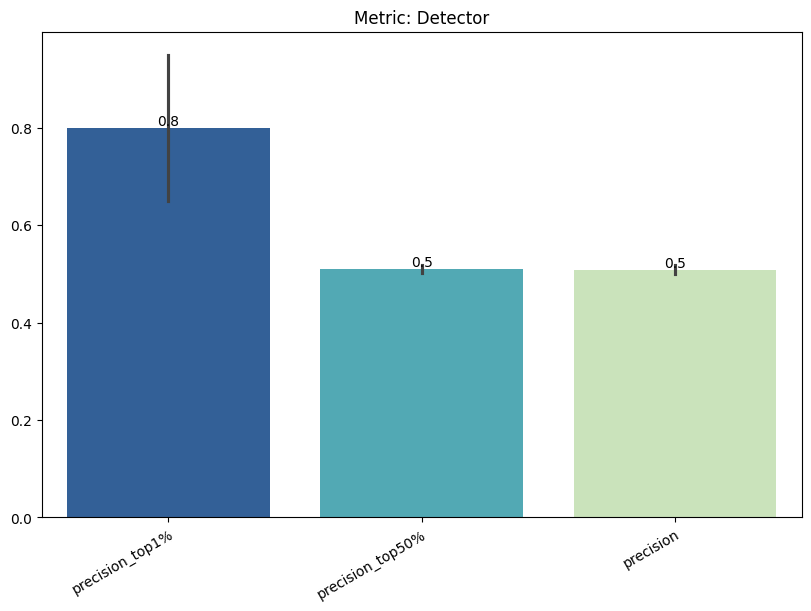
| Detector | min | 0 | 1.0 | 0 | detector | precision_top1% | 0.800000 |
| 1 | detector | precision_top50% | 0.509649 | ||||
| 2 | detector | precision | 0.507511 | ||||
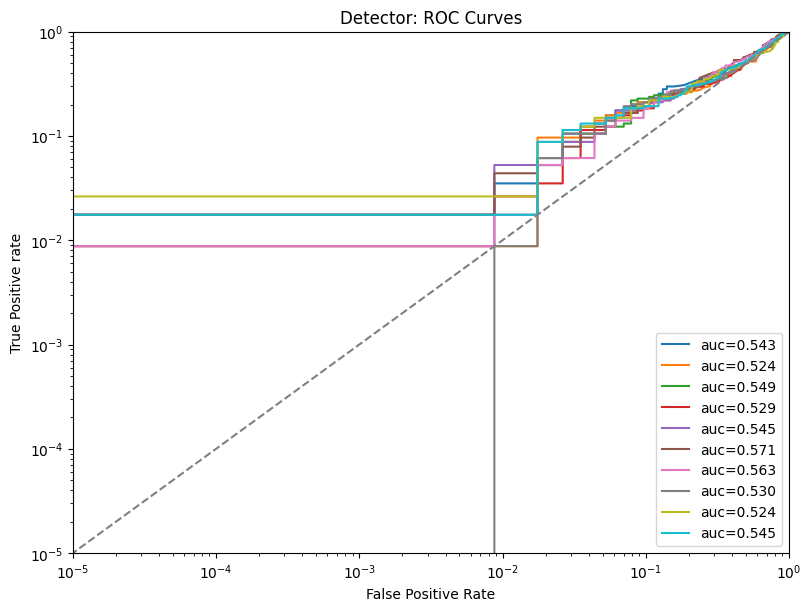
| 3 | detector | tpr_at_0.001%_fpr | 0.014035 | ||||
| 4 | detector | tpr_at_0.1%_fpr | 0.014035 | ||||
| GAN-Leaks | min | 0 | 1.0 | 0 | ganleaks | precision_top1% | 0.500000 |
| 1 | ganleaks | precision_top50% | 0.894737 | ||||
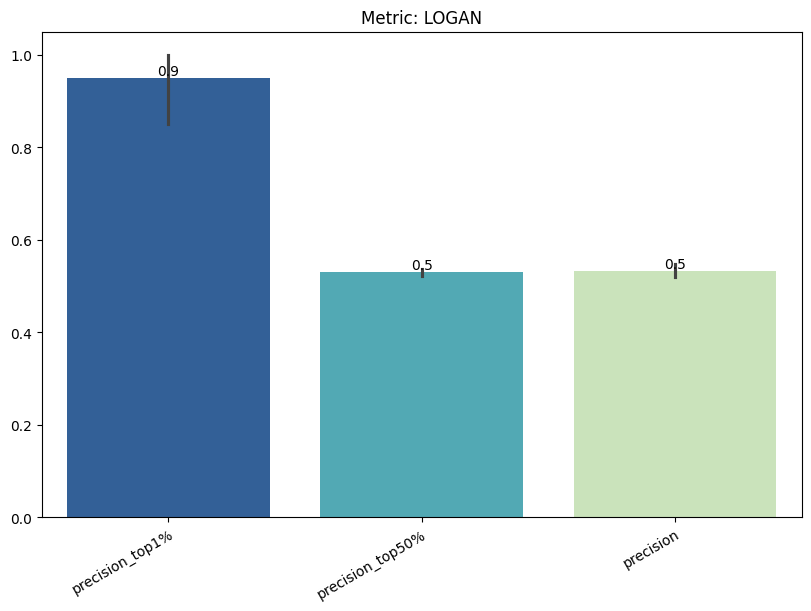
| LOGAN | min | 0 | 1.0 | 0 | logan | precision_top1% | 0.950000 |
| 1 | logan | precision_top50% | 0.529825 | ||||
| 2 | logan | precision | 0.532749 | ||||
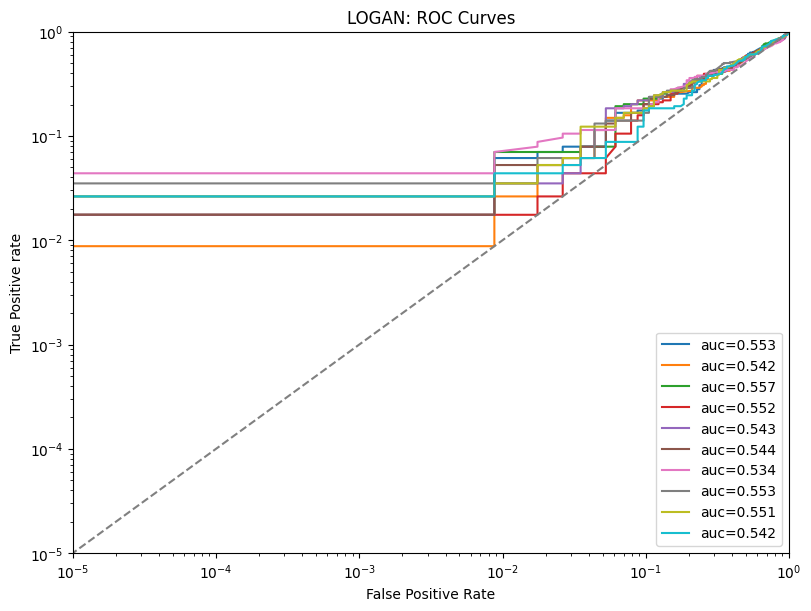
| 3 | logan | tpr_at_0.001%_fpr | 0.023684 | ||||
| 4 | logan | tpr_at_0.1%_fpr | 0.023684 | ||||
| Monte Carlo Membership | min | 0 | 1.0 | 0 | mcmebership | precision_top1% | 0.500000 |
| 1 | mcmebership | precision_top50% | 0.526316 | ||||
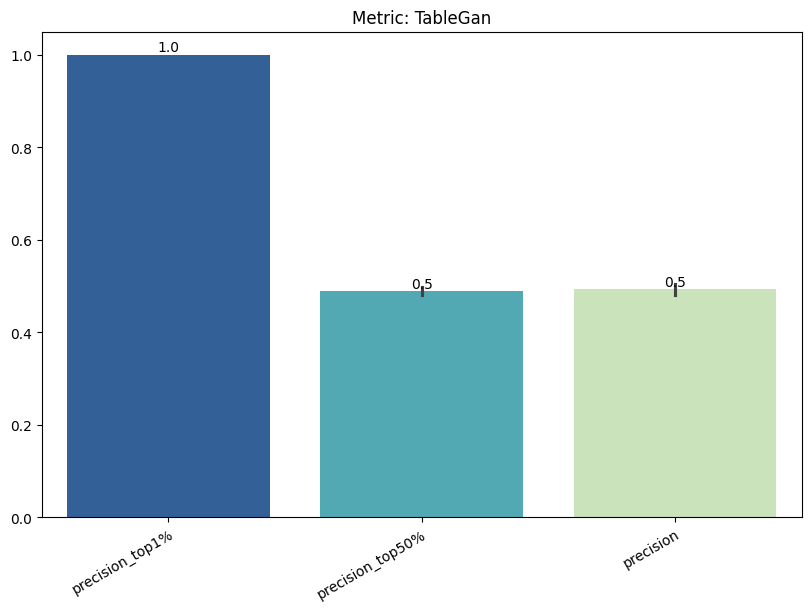
| TableGan | min | 0 | 1.0 | 0 | tablegan | precision_top1% | 1.000000 |
| 1 | tablegan | precision_top50% | 0.489474 | ||||
| 2 | tablegan | precision | 0.493370 | ||||
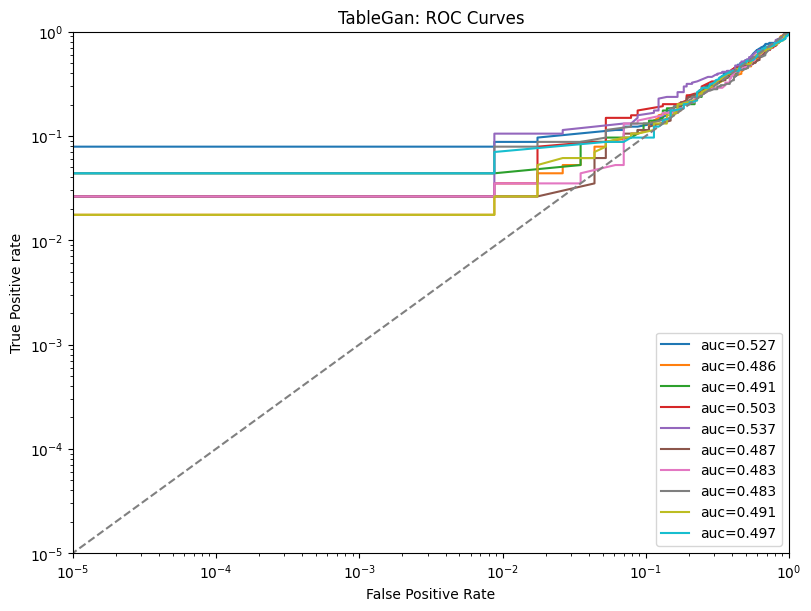
| 3 | tablegan | tpr_at_0.001%_fpr | 0.034211 | ||||
| 4 | tablegan | tpr_at_0.1%_fpr | 0.034211 |
Display the detailed report#
[20]:
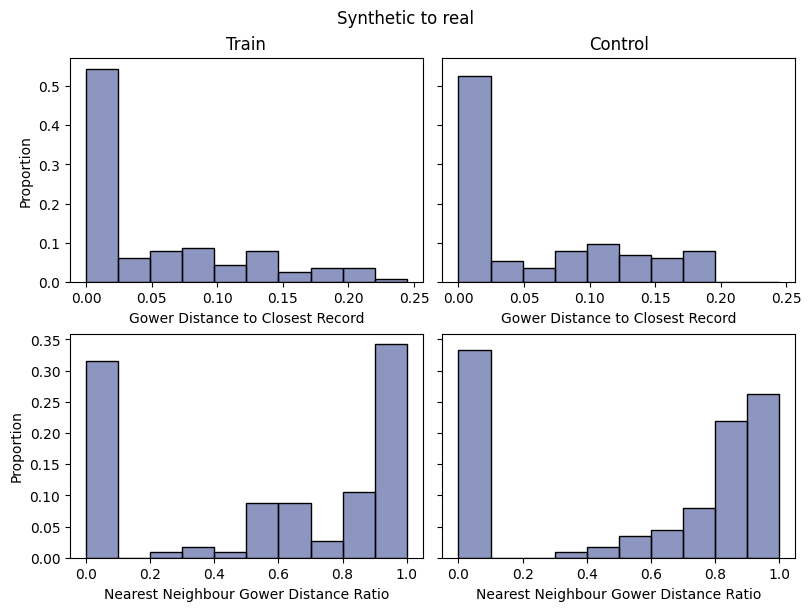
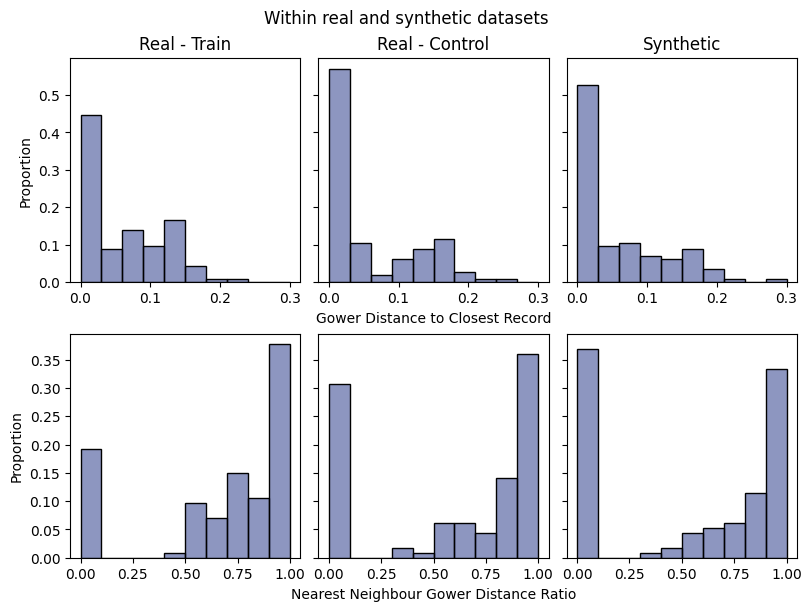
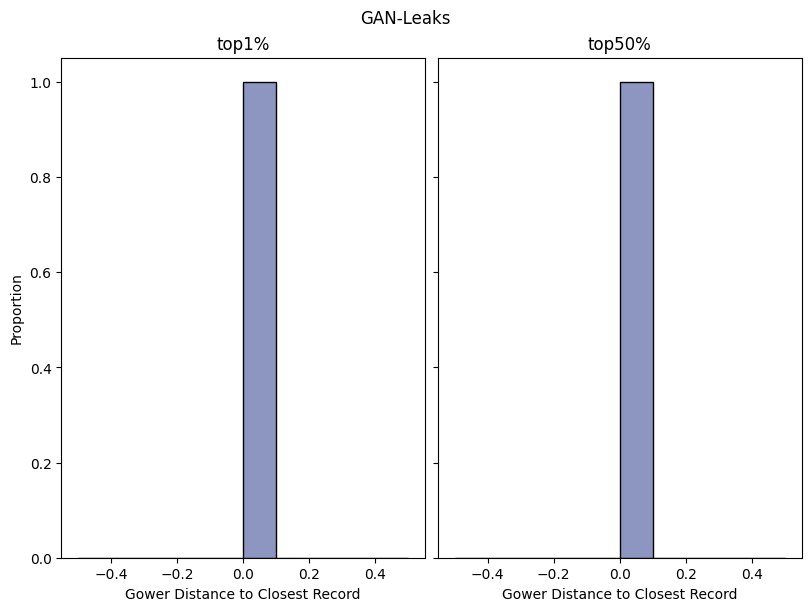
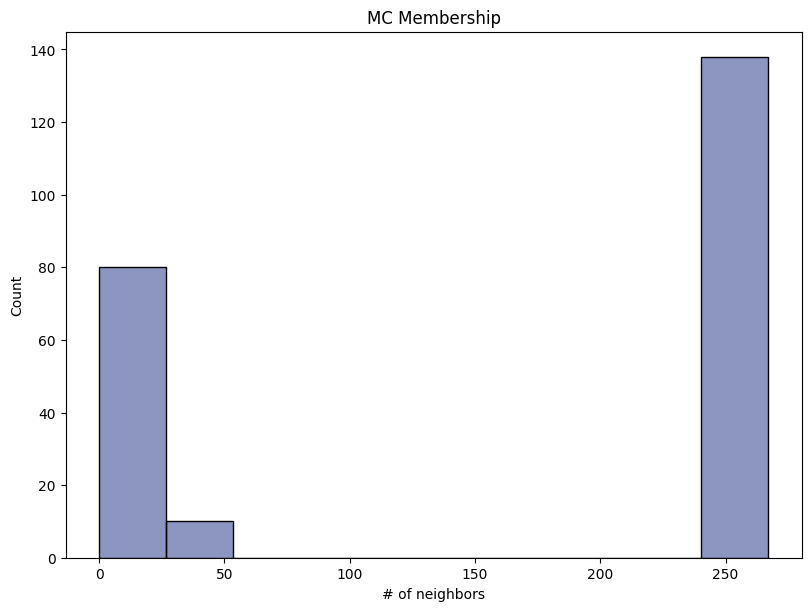
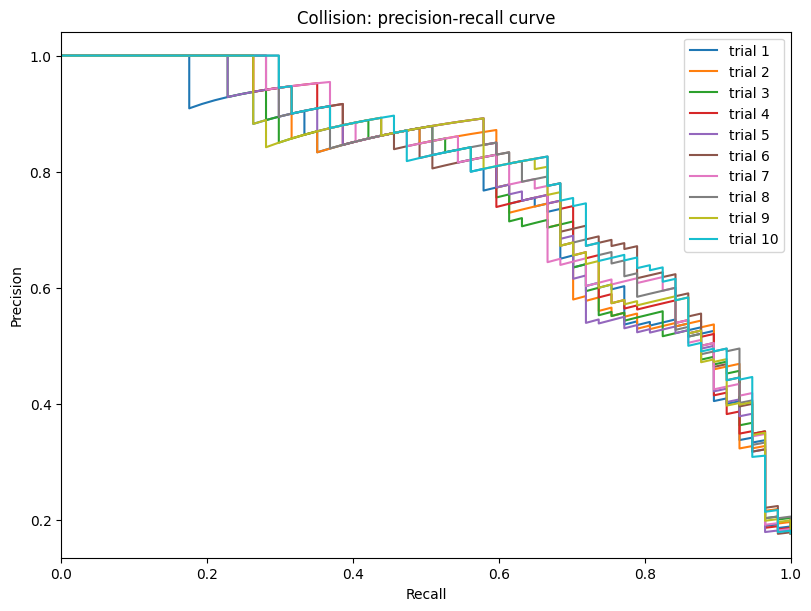
report.detailed(show=True, save_folder=None, figure_format="png")
Save and load the report#
[21]:
with tempfile.TemporaryDirectory() as temp_dir:
    report.save(savepath=temp_dir, filename="privacy_report")  # save
    new_report = PrivacyReport(
        report_filepath=Path(temp_dir) / "privacy_report.pkl"
    )  # load
[ ]: